
Contents
Global Climate disasters are not a future problem; melting glaciers, floods, European heatwaves, Amazon droughts, erratic rainfall, and African extreme weather events are consequences that we must confront today. Back in the 1990’s, the notion of climate change was largely associated with increasing global temperature causing melting of Arctic glaciers, which resulted in a rise in sea level. But today, the world is witnessing far more consequential incidents that disproportionately affect Global South countries.
Ironically, these countries’ role in anthropogenic contribution is negligible, as Nepal’s Prime Minister said: “We did not create this crisis, yet we are paying a colossal price for it”. In this dilemma, another warning came as a UNEP report titled “The point of return” warned, ‘1.5 C target has been lost following the decade of insufficient action’. Every overshoot in temperature exacerbates climate change-induced disasters across the world, which need a new orientation of climate mitigation, emphasising better adaptation.
Global leaders coming together in Antalya, Türkiye, from 9th to 20th November 2026 for the Conference of the Parties -31 (COP31) is, therefore, an opportunity for the Global South to unite, demand fair climate finance and achieve justice.
Climate change: a common threat
Climate change is a buzzword of the 21st century. It refers to long-term permanent shifts in temperatures and weather patterns caused by increasing atmospheric temperature as greenhouse gases absorb heat and retain it longer. It is mitigated via transitioning from fossil fuels to green renewables, capturing carbon through afforestation, and reducing other greenhouse gases from consumption.
Climate change mitigation has been a policy for decades, focusing on planting more trees, reducing deforestation, reducing pollution, and promoting green ways of life, but today this has evolved into the use of technological means to achieve mitigation, such as carbon capture and storage technologies. But the technological gap between the historical emitters (Global North Countries) and recent emitters (including the Global South) today is very wide. Technological intervention in a field that is capital-intensive is a very difficult path for developing countries to cope with.
Global North countries have contributed to and propounded laws to contain any further effects of emissions as they have reached their saturation point of development. They are backed by economies that can finance the development of climate management projects. However, looking at the other side, the Global South, having larger annual emissions as well as facing extreme climatic events like the current El Niño, is deprived of the ability to mobilise either capital or to research and develop technology in a short span of time alongside disaster management and relief activities.
Though Global South countries can divert their emission reduction via projects in renewable energy in fields such as biogas, fuels, nuclear energy, and hydro-electrification, the research and development part in these aspects brings us to the need for free transfer of ideas, technologies, and know-how in respect of mitigation, monitoring, and management technologies. For the Global community to thrive, collective development is necessary.
A forgotten promise; one decade of denial
A decade ago in Paris World leaders agreed to halt the global temperature rise at 1.5 degree over the preindustrial levels with a critical limit of 2.0 degree as the mark by reducing carbon emissions. While achieving the common goal, the Summit acknowledged the historical responsibilities of developed countries as they are the largest emitters (US 40%, Europe 29%) of carbon and other GHG since the time of industrialization, while global south were largely passive actors with a record of low emission.
Also, today’s economic inequalities can be interpreted as industrialised countries (Global North or coloniser) achieving their development via exploiting the Global South, both in human and raw materials, with carbon-intensive industries. Developing countries are facing the threat multiplier effects of climate change alongside the scarcity of resources and huge populations. While having limited finances in the provision of basic welfare is itself a hassle in several ways, focusing on and being forced to adapt to Westernised climate action policies without any risk mitigation framework and strategy is an unfair burden.
To compensate for the historic injustice, UNFCCC and subsequent conferences developed the concept of climate justice that acknowledged the responsibilities of the Global North in mitigation efforts. Common but differentiated responsibilities (CBDR) and climate finance architectures built on equity models for mandating the flow of resources, transfer of technologies, and assistance towards the Global South.
Every conference ended up with promising rhetoric and pledges from developed countries on climate finance, however they have delivered resources shorter than promised, far lower than required. Notwithstanding the inadequate international support, the developing countries have actively engaged in climate mitigation by greening their energy sources, which puts a significant financial burden.
Beyond mitigation, climate change-induced disasters are reshaping global functioning; developing countries, in particular, face unprecedented hazards. Climate adaptation is another major area where countries must coordinate and extend their technologies, resources, and expertise as emerging challenges pose grave threats. It is crucial for limiting risks, building resilience, and advancing inclusive development; moreover, it reduces losses and damages. However, Global South countries again lack resources, technologies, and expertise; more importantly, institutions and legal mechanisms to sustain their efforts.
The reality of the Global North’s contribution
A UN assessment projected that better adaptation programmes to 155 developing countries are required at US$255-328 billion per year by 2035; however, developed countries so far delivered only one tenth of it (28-31 billion US$). “For every dollar developing countries need to adapt, they receive just 10 cents,” said the UN Chief. Every year, natural calamities accelerate rapidly and put millions of lives at stake; conversely, the adaptation funds flatline (a 1 billion rise from last year). Though it was too little, too late to compensate had another structural barrier as only 44% of them were embarked as grants remaining over 55% predominantly concessional loans which put debt burden on developing countries.
In the recent Nepal catastrophic landslide killed over 1300 people, left 5000 more missing, destroyed thousands of homes and other infrastructure including hydropower projects. Nepal Government sought $5 billion for reconstruction and resilient adaptation; by contrast, the UN fund for responding to loss and damage (FRLD) has approved a fraction of 21.6 million (0.5% of the amount demanded) towards Kathmandu. The issue is clearly the difference between the predicted loss and actual loss scales.
Beyond inadequate funding, implementation faces institutional barriers and structural constraints. Effective climate resilience requires investments across the entire response chain, from renewable energy generation, modern power grids, energy efficiency, carbon capture and storage, desalination and recycling to early-warning systems that reduce disaster damage and save lives, alongside effective rescue and reconstruction mechanisms. Drones and artificial intelligence (AI) can make these interventions faster, more cost-effective and accessible in remote areas. Harnessing AI for climate resilience, weather forecasting, satellite-based monitoring, and communication systems can further strengthen coordination between countries and ensure that timely information reaches vulnerable communities.
However, these advancements are concentrated in the Global North and its access. Better adaptation is a prerequisite condition for climate change mitigation; to ensure this balance, developing countries must benefit from technology transfer, but UNFCCC commitments remain unrealized and slow to be operationalized. Developed countries must address patents, royalties, licensing income, and their high R&D costs, which vulnerable countries cannot afford.
Another challenge is utilising the existing technologies and employing it to disaster relief and rescue requires expertise, which need to be trained and shared across vulnerable communities. Bodies such as the Green Climate Fund and Global Environment Facility must take initiatives and be operational in the smooth transfer of technology and flow of capital immediately.
Way ahead
Gatherings like COP 31 are better placed to address the widening knowledge gap that causes larger casualties, accelerates damage, and deviates the Global South from sustainable development, undoing the achievements of climate mitigation so far.
COP 31 must provide a platform to examine the conditionality of the Global South, negotiate to sort technology and skill set transfers, and equip vulnerable communities to build resilient infrastructure; enabling the Global North to transfer technologies through concessional rates, offset their R&D costs with collective funds, enhance financial resources through active campaigns, high-level engagements, committed targets, periodic updates, and maintaining predictable fund flows.
Adaptation must be prioritized by ensuring adequate funds, availability of technologies, enabling communities to be aware, address, and adopt effectively, along with customised local requirements, limiting the potential losses from climate change. Soumya Nair, Counsellor at India’s Permanent Mission to the UN, recently reiterated that “COP31 should operationalise the just transition mechanism grounded in equity and CBDR-RC, safeguarding livelihoods and nationally determined development pathways.” Her statement serves as both a reminder and a call for global leaders to act decisively before the momentum for meaningful climate action dissipates.
Climate finance must be anchored in justice, equity and shared responsibility. As climate-induced disasters intensify, the priority must shift from prolonged negotiations to timely action, ensuring that the Global South has access to adequate financing, advanced technologies, and institutional capacity to mitigate climate risks and build resilience. The transition cannot succeed if those most vulnerable to its consequences lack the resources to respond.
Preserving the planet for future generations demands a historic opportunity for the Global South to forge a collective voice and secure its rightful share of climate finance and technology. The Global North, in turn, must translate its responsibility into tangible commitments and sustained action. These are not competing obligations but interdependent imperatives: climate justice and climate action are ultimately two sides of the same coin.
Views expressed are personal and do not purport to represent the views, research, or editorial stance of the CRGD.
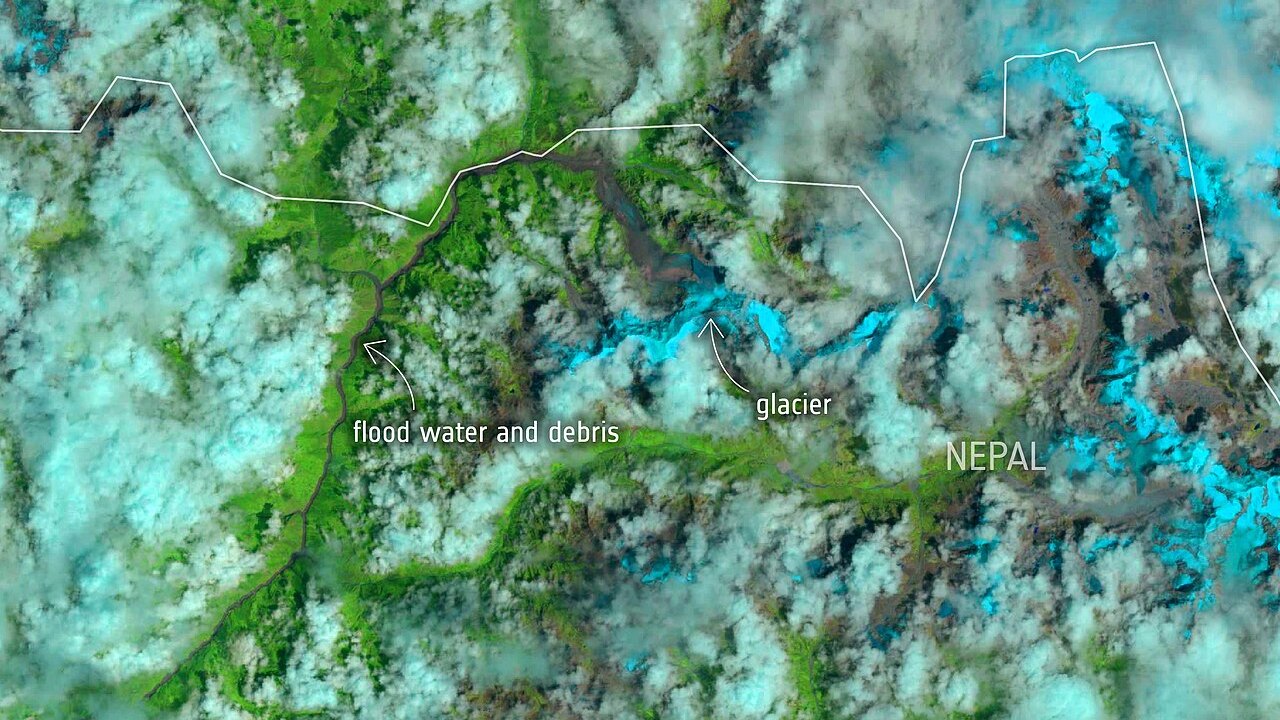
Cover image: “Nepal glacier collapse and flood (after)” by the European Space Agency (ESA), from Landsat 9 imagery taken on 26 August 2026, via Wikimedia Commons, licensed under CC BY 4.0. Cropped from the original.
About the authors

Thirunavukarasu S.
Thirunavukarasu S. is a doctoral researcher at the Department of Defence and Strategic Studies, University of Madras, and a recipient of the UGC Junior Research Fellowship. He has previously worked with political consultancy firms including I-PAC, Buzz and Chatter, and Voice of Commons. His research interests include governance, security, constitutional affairs, political strategy, and public policy. He also regularly contributes editorials and opinion pieces on governance, security, and constitutional matters.
~2.jpg.jpeg)
Faheema Basheer
Faheema Basheer is a Master’s Student at the Department of Politics and Public Administration, University of Madras.